Theory
The RT1 module provides a method for calculating the scattered radiation from a uniformly illuminated rough surface covered by a homogeneous layer of tenuous media. The following sections are intended to give a general overview of the underlying theory of the RT1 module. A more general discussion on the derivation of the used results can be found in Quast and Wagner [.QW16]. Details on how to define the scattering properties of the covering layer and the ground surface within the RT1-module are given in Model Specification.
The utilized theoretical framework is based on applying the Radiative Transfer Equation (RTE) (1) to the geometry shown in Fig. 2.
The individual variables are hereby defined as follows:
\(\theta\) denotes the polar angle in a spherical coordinate system
\(\phi\) denotes the azimuth angle in a spherical coordinate system
\(r\) denotes the distance within the covering layer
\(I_f(r,\theta,\phi)\) denotes the specific intensity at a distance \(r\) within the covering layer propagating in direction \((\theta,\phi)\).
\(\kappa_{ex}\) denotes the extinction-coefficient (i.e. extinction cross section per unit volume)
\(\hat{p}(\theta,\phi,\theta',\phi')\) denotes the scattering phase-function of the constituents of the covering layer
Note
To remain consistent with [.QW16], the arguments of the functions \(\hat{p}(\theta,\phi,\theta',\phi')\) and \(BRDF(\theta,\phi,\theta',\phi')\) are defined as angles with respect to a spherical coordinate system in the following discussion. Within the RT1-module however, the functions are defined with respect to the associated zenith-angles!
A relationship between the module-functions and the functions within the subsequent discussion is therefore given by:
SRF.calc(t_0,t_ex,p_0,p_ex) \(\hat{=} ~BRDF(\pi - \theta_0, \phi_0, \theta_{ex},\phi_{ex}) \quad\) and \(\mbox{}\quad\) V.calc(t_0,t_ex,p_0,p_ex) \(\hat{=} ~\hat{p}(\pi - \theta_0, \phi_0, \theta_{ex},\phi_{ex})\)
Problem Geometry and Boundary Conditions
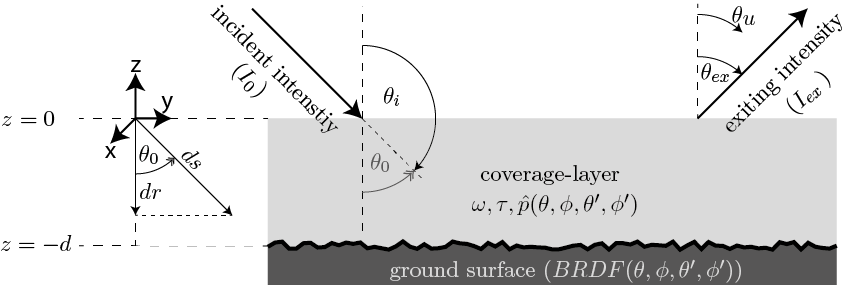
Fig. 2 Illustration of the chosen geometry within the RT1-module (adapted from [.QW16])
As shown in Fig. 2, the considered problem geometry is defined as a rough surface covered by a homogeneous layer of a scattering and absorbing medium.
In order to be able to solve the RTE (1), the boundary-conditions are specified as follows:
The top of the covering layer is uniformly illuminated at a single incidence-direction:
Radiation impinging at the ground surface is reflected upwards according to its associated Bidirectional Reflectance Distribution Function (BRDF)
The superscripts \(I^\pm\) hereby indicate a separation between upwelling \((+)\) and downwelling \((-)\) intensity.
The additional specifications of the covering layer and the ground surface are summarized as follows:
Parameters used to describe the scattering properties of the covering layer
Scattering Phase Function: (i.e. normalized differential scattering cross section)
Optical Depth:
where \(\kappa_{ex}\) is the extinction coefficient (i.e. extinction cross section per unit volume) , \(\kappa_{s}\) is the scattering coefficient (i.e. scattering cross section per unit volume) , \(\kappa_{a}\) is the absorption coefficient (i.e. absorption cross section per unit volume) and \(d\) is the total height of the covering layer.
Single Scattering Albedo:
Parameters used to describe the scattering properties of the ground surface
Bidirectional Reflectance Distribution Function:
where \(R(\theta,\phi)\) denotes the Directional-Hemispherical Reflectance of the ground surface.
TBD: perhaps describe also normalization conditions for p and BRDF
First-order solution to the RTE
Incorporating the above specifications, a solution to the RTE is obtained by assuming that the scattering coefficient \(\kappa_s\) of the covering layer is small (i.e. \(\kappa_s\ll 1\)). Using this assumption, the RTE is expanded into a series with respect to powers of \(\kappa_s\), given by:
where the individual terms (representing the contributions to the scattered intensity at the top of the covering layer) can be interpreted as follows:
\(I_{\textrm{surface}}\): radiation scattered once by the ground surface
\(I_{\textrm{volume}}\): radiation scattered once within the covering layer
\(I_{\textrm{interaction}}\): radiation scattered once by the ground surface and once within the covering layer
- \(I_{svs}\): radiation scattered twice by the ground surface and once within the covering layer
(This contribution is assumed to be negligible due to the occurrence of second order surface-scattering)
After some algebraic manipulations the individual contributions are found to be given by (details can be found in [.QW16]):
Evaluation of the interaction-contribution
In order to analytically evaluate the remaining integral appearing in the interaction-term, the BRDF and the scattering phase-function of the covering layer are approximated via a Legendre-series in a (possibly generalized) scattering angle of the form:
where \(P_n(x)\) denotes the \(\textrm{n}^\textrm{th}\) Legendre-polynomial and the generalized scattering angle \(\Theta_a\) is defined via:
where \(\theta ,\phi\) are the polar- and azimuth-angles of the incident radiation, \(\theta_{s}, \phi_{s}\) are the polar- and azimuth-angles of the scattered radiation and \(a_1,a_2\) and \(a_3\) are constants that allow consideration of off-specular and anisotropic effects within the approximations.
Once the \(b_n\) and \(p_n\) coefficients are known, the method developed in [.QW16] is used to analytically solve \(I_{\textrm{interaction}}\).
This is done in two steps:
First, the so-called fn-coefficients are evaluated which are defined via:
Second, \(I_{\textrm{interaction}}\) is evaluated using the analytic solution to the remaining \(\theta\)-integral for a given set of fn-coefficients as presented in [.QW16].
Click here for an example how to evaluate the fn-coefficients manually and with the RT1 package.